


When adults asked what I wanted to be when I grew up, I would always say "I don't know." But contrary to what they thought, I knew exactly. It was just that revealing that information would jeopardize the very purpose of my vocation...
When I was a kid, I wanted to be a secret agent. Maybe it was all those Agatha Christie books or how often I played detective and asked too many questions. Either way, when pressed about my future dreams (when I was 8), I’d carefully eliminate suspicion with a boilerplate answer for the teachers and authority figures: “veterinarian” or “church singer” always earned smiles and zero follow-up questions.
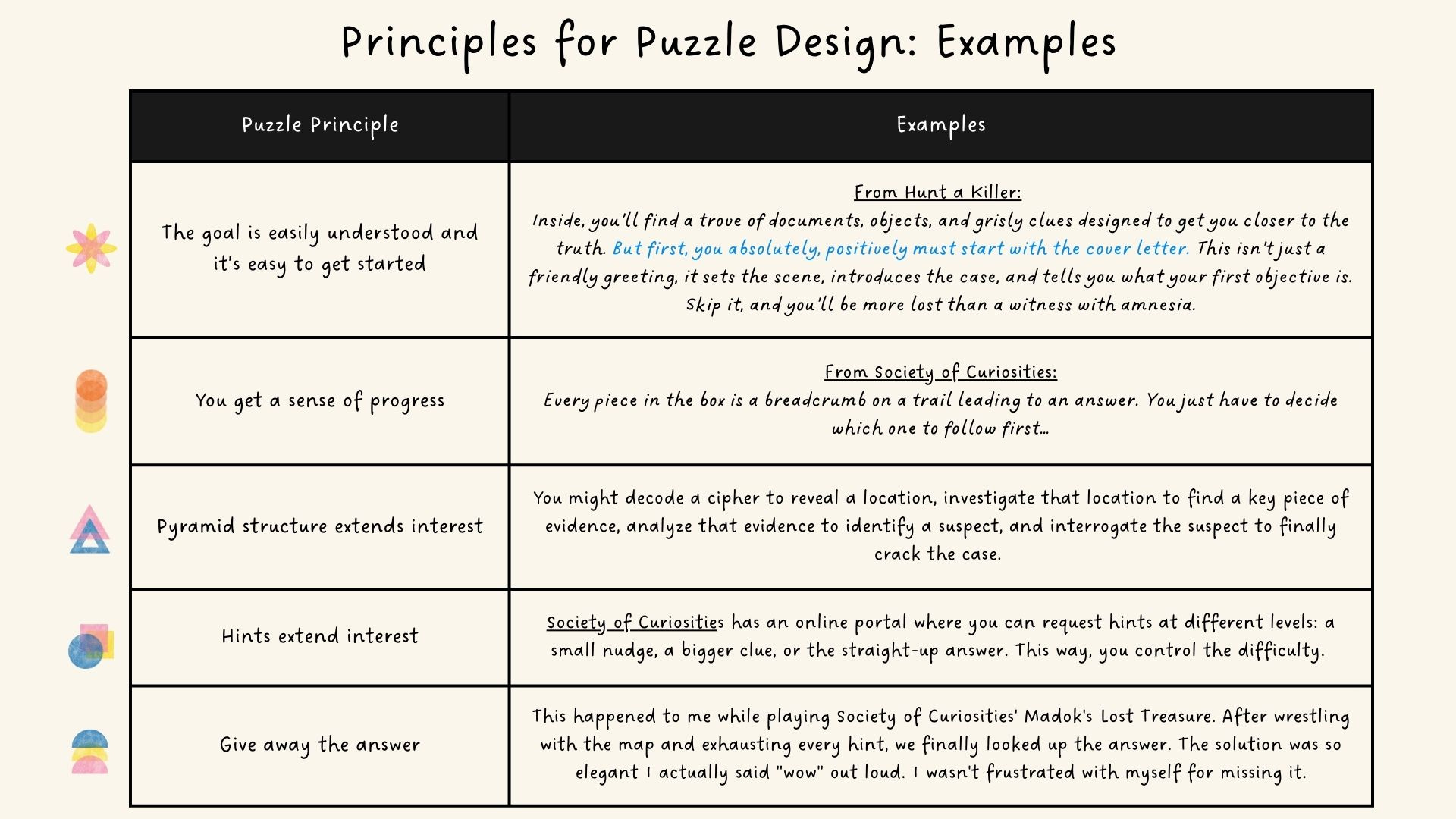
I never became a secret agent (or did I?) But that childhood dream shape-shifted into a love for mysteries and puzzles. So years later, when my friend M invited me over to play Hunt a Killer (a mystery puzzle box), I was intrigued. We opened the box to find police reports, newspaper clippings, notes written by suspects, financial records and physical trinkets…
Mystery-in-a-box games like this are the format we’re exploring today!

📰 What’s the format?
A stack of adventures positioned somewhere between an escape room, a puzzle, and an alternate reality game. These types of games became very popular during the pandemic, when Escape Game creators (and people in adjacent trades, like theater) had to find alternatives to stay afloat.
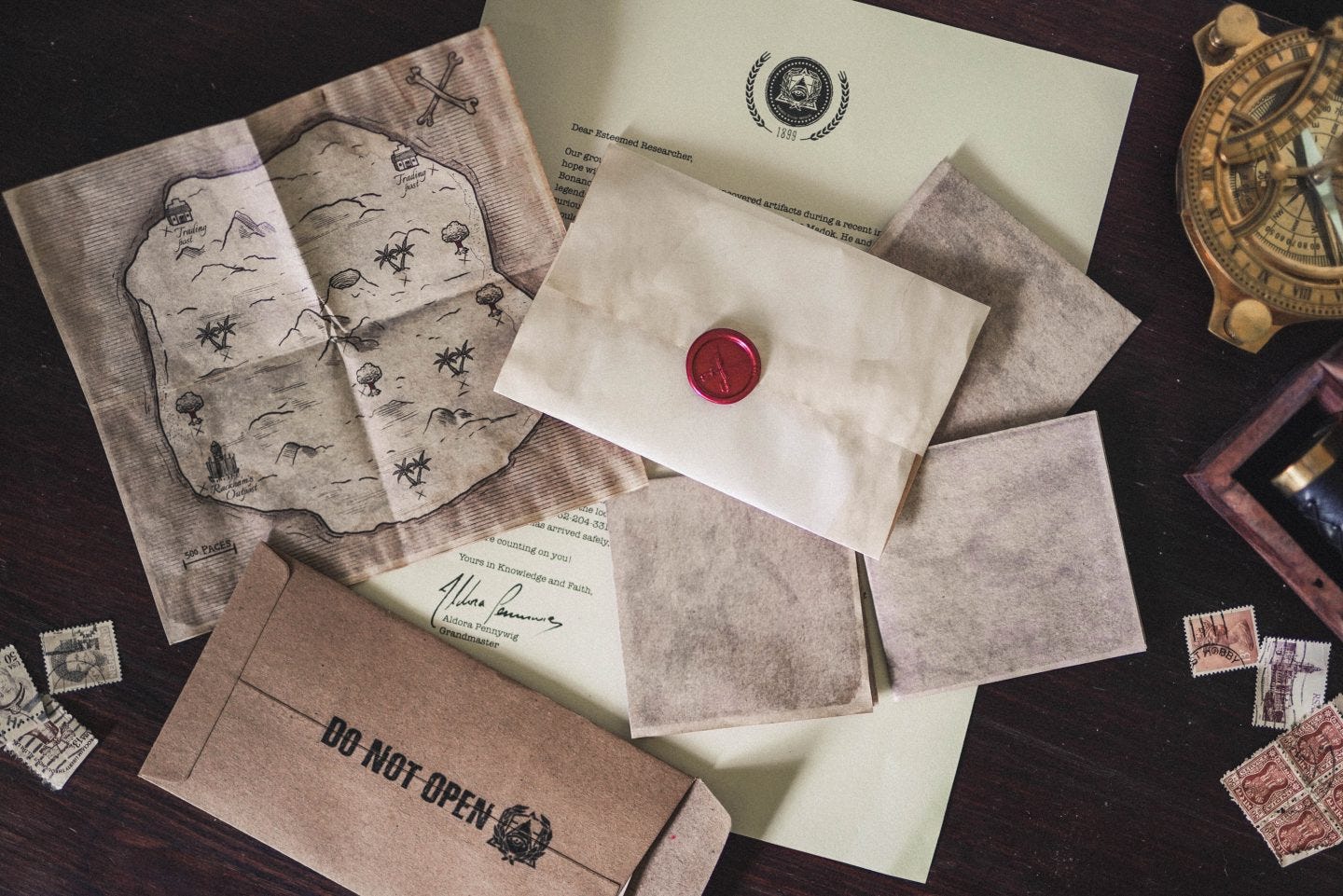
One example is Hunt a Killer, where you have to do a lot of reading, note-taking, and data organization to get ahead in your investigations, but my favorite is from a company called Society of Curiosities. Robyn gifted me this mysterious envelope last Christmas which included ancient maps, wax-sealed cryptic notes, and a golden coin.
The goal is to explore the Caribbean Sea and track down a treasure lost since the Golden Age of Piracy. All while discovering hidden websites (that look very real), sending messages to characters, and deciphering puzzles.
Another example is Club Drosselmeyer, which draws heavily from interactive theater. The game is a radio show experience where you call different characters and make different choices. You hear a different radio broadcast depending on what you choose. The game has both live interactive performances, where players can speak with actual actors, and recorded versions, which players can complete on their own time.


🎛️ What are the features?
#1. Worldbuilding
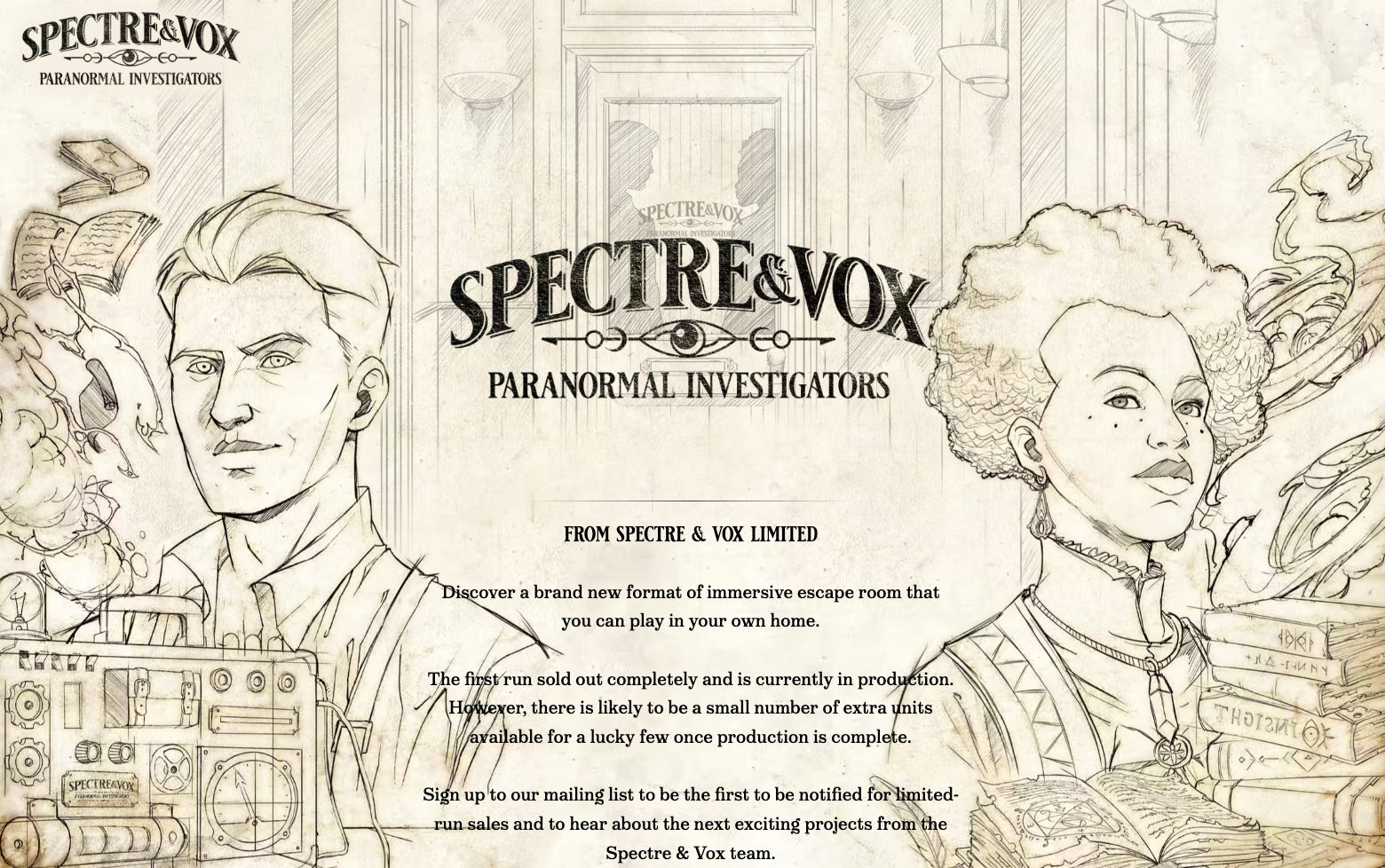
Escape room creator Nick Moran uses his theater background to capture something special: that feeling of losing yourself in a live performance, packaged in a box you can experience at home. He created Spectre & Vox, a 3D table-top adventure game that combines lights, sound and interactive storytelling for you to solve your own immersive mystery. (The game was funded in 3 hours on Kickstarter).
☞ Other formats that explore worldbuilding: Around the World in 80 Days.
#2. Interactivity
Playing the Society of Curiosities game was a lot more fun after I enlisted Fer and Olga. There's something magical about group problem-solving, that moment when someone spots a pattern you missed, or when you're all huddled around a cryptic map arguing about what the symbols mean. These games are designed for that collaborative energy.
But these games also offer a different kind of interaction: chatbot systems that let you communicate with characters in the story. You can ask questions, send answers, or request additional clues.
☞ Other formats that explore interactivity: Scavenger Hunts
#3. Analogue and Digital
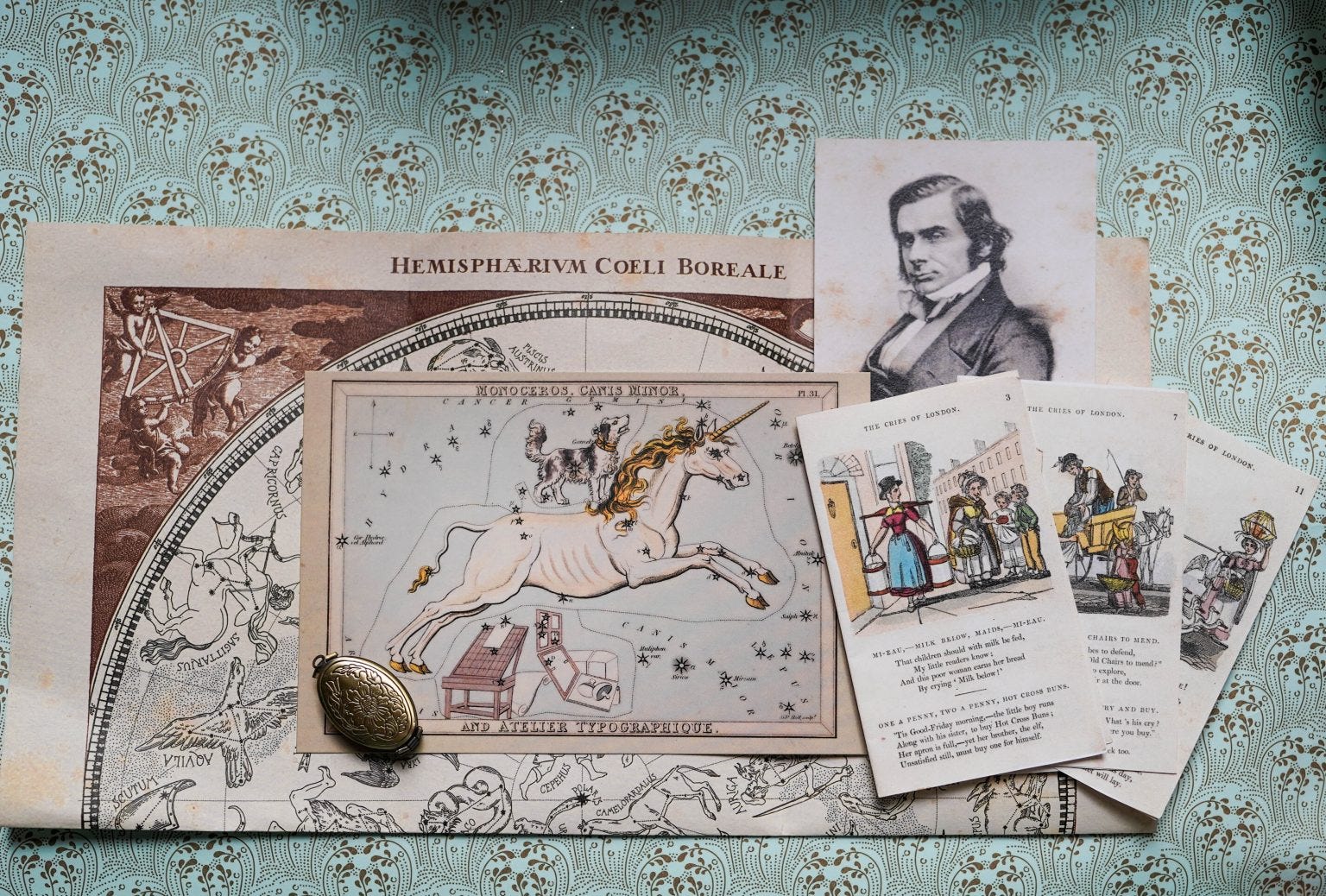
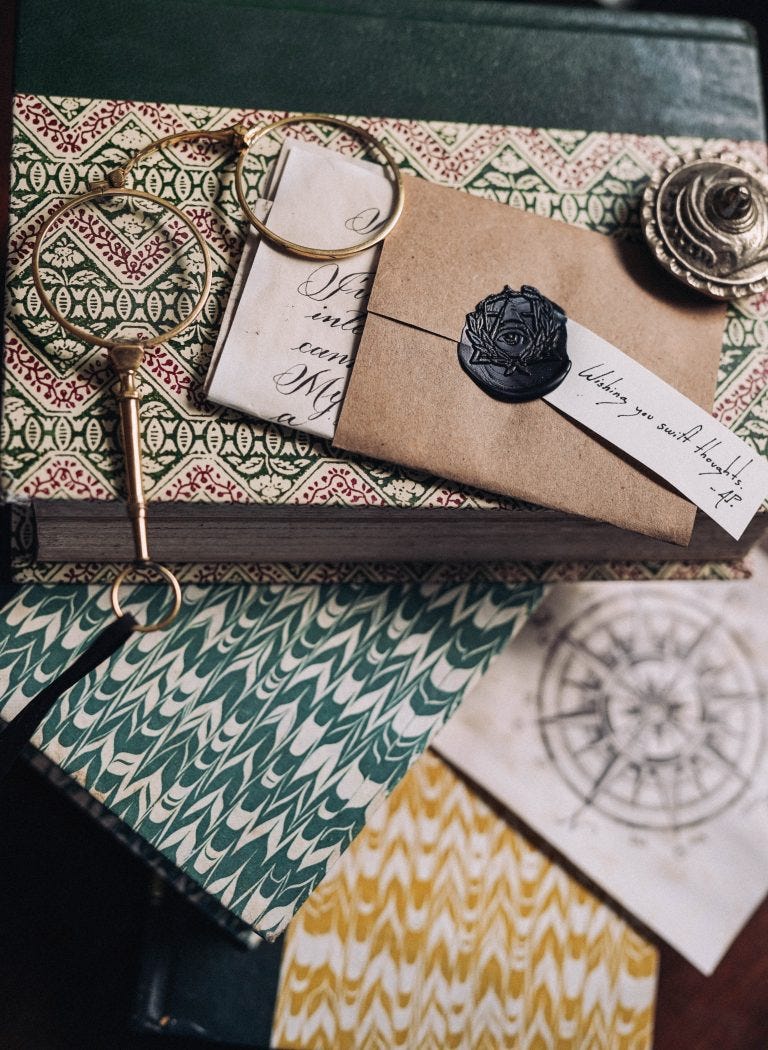
One thing I love about these games is how they blend analog and digital elements. You might be examining a hand-drawn map with coffee stains on it, then discover a website URL hidden in the margin that leads you to a character's email inbox. Or you're holding a physical coin in your hand, feeling its weight and noticing the worn edges, while simultaneously decoding a digital cipher on your laptop.
Maybe the physical stuff makes you feel like a detective and the digital tools let you think like one.
☞ Other formats that explore analogue and digital - The End: Involving Your Audience Completely

💡 Why is this format effective for learning?
Games are puzzles to solve, and puzzles make us stop and think. That’s because our brains are pattern-recognition machines: they’re constantly trying to fill in the blanks and connect the dots. We do this so automatically we don’t even notice.
Here’s what makes games special as learning tools: they do half the work for us. In real life, our brains have to extract patterns from messy, complicated reality. But games come pre-packaged as clear systems with defined rules. They’re easier to parse, which makes them easier (and more fun) to learn from.
In The Art of Game Design: A Book of Lenses, Jesse Schell breaks down what makes puzzles work. I've pulled out a few principles that apply just as much to learning experiences as they do to games:
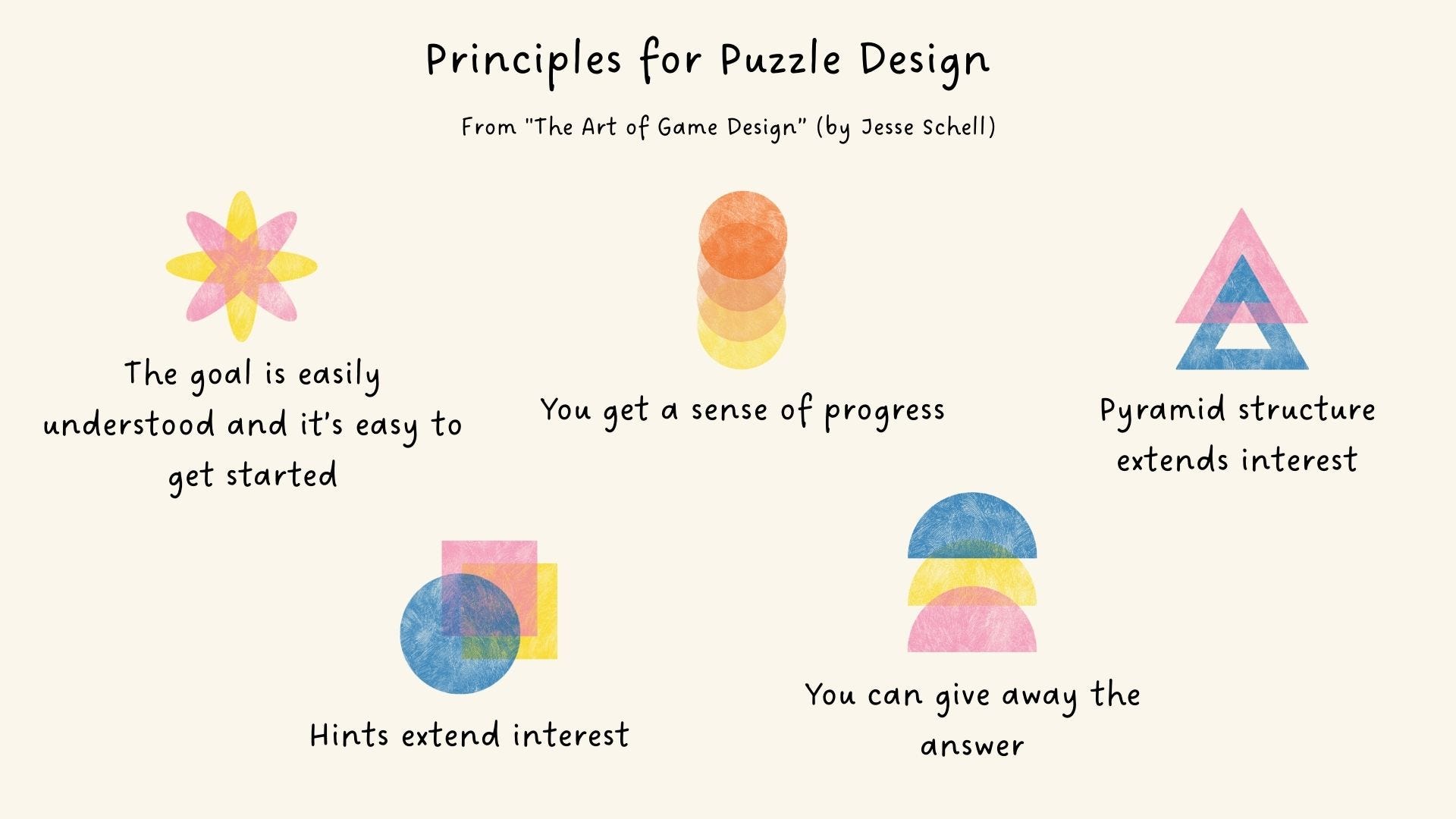

The goal is easily understood and it’s easy to get started
If players aren’t sure what they are supposed to do, they will quickly lose interest. Puzzlemaster Scott Kim says that “To design a good puzzle, first build a good toy”. That means that knowing how to play should be obvious from the beginning.

You get a sense of progress
A riddle is just a question that demands an answer. A puzzle also demands an answer but frequently involves manipulating something so that you can see or feel yourself getting closer to the solution, bit by bit…
Pyramid structure extends interest
A pyramid structure is just a series of small puzzles that each give some kind of clue to a larger puzzle… When a game combines short and long-term goals, it becomes more engaging.

Hints extend interest
The best mystery box games understand that frustration is the enemy of fun. That's why most include built-in hint systems.
The trick is making hints feel like part of the experience, not a failure state. Great games integrate hints into the narrative. Maybe a helpful character texts you a cryptic clue, or you “discover” a hidden note that points you in the right direction.
Give away the answer
If you have given serious consideration to a problem, your problem-solving brain is primed for a rush of pleasure at merely seeing or hearing the answer. It's a kind of ‘respectful revelation’… giving players credit for their effort by showing them the beautiful mechanism they were trying to unlock.
💌 An invitation
Maybe I never became the secret agent I dreamed of being. But these mystery boxes offer something unique: the chance to step into that role whenever I want, while actually learning something about problem-solving, pattern recognition, and collaborative thinking. And unlike my childhood fantasy, I don't have to keep it secret from anyone.
Other similar, cool formats you can explore:
Whispers Club - Whispers is a monthly letter subscription from the fictional town of Mythbridge. You’ll receive a letter exploring the fantasy town and a real life relatable topic, a print, 3 stickers, and a journaling activity, all packed in a wax-sealed envelope.
History by Mail - Each month, a piece of the past arrives at your doorstep. A historical document, along with context document meticulously reproduced on premium archival paper, capturing the essence of a bygone era.
Jessica Oreck’s Office of Collecting and Design - You’ll be sent a coded message each month, it might be a password that unlocks an exclusive giveaway of curious treasures, a delightful poem to savor, or the beginning of a digital adventure that will lead you down an unexpected path.


🪁 Life Lately
Went to Vincent Moon’s Live Cinema
Discussed purpose, legacy, and identity in my local Book Club after reading Hemingway’s The Old Man and the Sea.
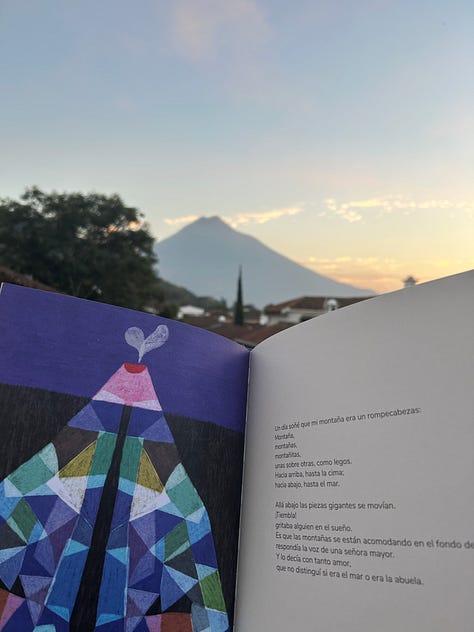
Re-read one of my favorite children’s book No cualquier montaña, by Julio Serrano Echeverría. A book that talks about “volcanoes, tectonic plates, earthquakes, ashfall, and other natural phenomena, seen through the eyes of a girl who, like the author, lives on the slopes of the Ring of Fire: the Pacific volcanic belt, one of the most active in the world…”



I appreciate your time. Thank you for reading! 💙 I also value your feedback (suggestions, critiques, constructive ideas…) I’d love to hear about you in the comments.
→ Or just click the heart symbol. That always makes me smile :-)
*This post’s cover gif is by @gifitup
Great article! It reminded me of a video game I used to play as a kid called ¿Dónde está Carmen Sandiego?. You had to chase suspects all around the world. Thanks for the memories! :)